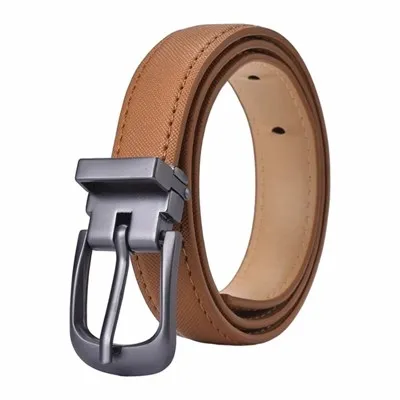

Some say that a man's last shred of dignity is fastened to his belt.
Though it may appear to be merely a narrow strip, it occupies a pivotal position-one that exerts a critical visual influence on one's overall aesthetic.
The slightest misstep can drag your meticulously crafted look down to rock bottom-or, as the colloquialism goes, make it look "janky."
To help you preserve this final vestige of dignity, today we offer a comprehensive breakdown of "the humble belt."
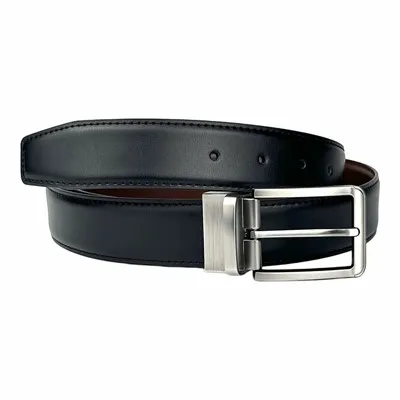
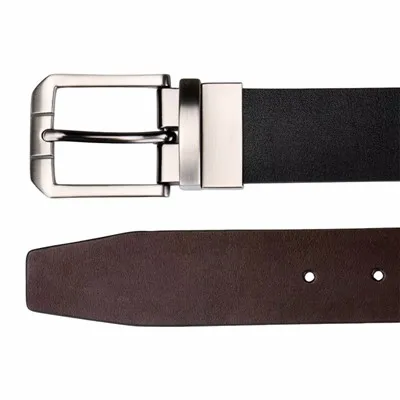
Regardless of how trends evolve, the fundamental anatomy of a belt typically comprises the following elements:
- The Strap: The main body of the belt, designed to encircle the waistline of one's trousers.
- The Buckle: The sole mechanical component of the belt, serving to connect and secure the strap to the tip.
- The Tip: The leading end of the belt-often the most visually prominent feature of the entire piece.
- The Tail: The trailing end of the belt, marking the finishing point of the material.
Typically, the buckle and tip are crafted from materials such as zinc alloy, brass, or stainless steel, while the majority of durable, sturdy belt straps are made from leather.
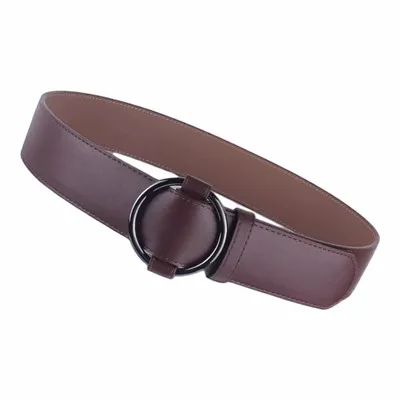
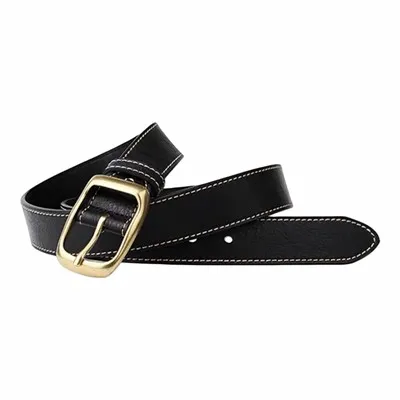
The belt buckles commonly encountered in daily life fall into four main categories: pin buckles, clasp buckles, automatic buckles, and double-ring buckles.
Pin buckles are best suited for formal occasions and vintage-inspired looks; Clasp buckles lean toward a more casual aesthetic; Double-ring buckles are typically paired with woven materials, lending themselves to sporty or casual styles; automatic buckles, on the other hand, tend to look somewhat dated.
The Purpose of a Belt
People wear belts primarily to fulfill two distinct needs:
1. To Secure the Outfit:
When the waistband of one's trousers does not fit the waist perfectly, a belt is required to hold them in place.
In formal settings, a belt is also essential for maintaining a crisp, tidy appearance; after tucking a shirt into one's trousers, the fabric must be smoothed out and secured with a belt to conceal any minor creases or bunching at the waistline.
2. To Refine the Silhouette:
Visually, the belt serves as the dividing line between the upper and lower halves of the body. Consequently, adjusting the height at which the belt sits can effectively elongate the legs and help to flatter or balance out one's physique.
Appropriate Occasions for Wearing a Belt
When categorized by context, belts generally fall into just two broad categories: formal occasions and casual occasions.
When wearing a belt in a formal setting, particular attention must be paid to coordination:
The color of the belt strap should match the color palette of your shoes and any other leather accessories-ideally, they should be the exact same color. When your belt and shoes fall within the same color family, aim to select a shade for the belt that is as close as possible to the color of your shoes.
Furthermore, the metal tip and buckle of your belt should match the color of any other metal jewelry or accessories you are wearing-such as a watch, brooch, or cufflinks.
To maintain a subtle and streamlined fit, formal belts typically feature understated, polished buckles and are relatively narrow in width, generally ranging between 2.5 and 3.5 centimeters.
Adjust the belt's width according to your personal physique: if you have a more robust build, you may opt for a slightly wider belt; conversely, if you have a slender build, choose a finer, narrower style.
For formal belts, allow only a few centimeters of the belt's tail to extend past the buckle; never let the excess strap dangle below your waistline.
Casual settings offer a much broader scope and allow for far greater freedom of expression. Styles we are all familiar with-such as "Americana/ Amekaji" and sportswear-can all be incorporated into this category.
In terms of materials, options extend beyond traditional leather to include synthetic fabrics, woven textiles, and more.
Casual belts often feature buckles that are more decorative in nature; oversized faceplates and prominent brand logos are common design elements.
Moreover, as a focal point of your outfit, a casual belt can certainly be wider, thicker, and possess a much more commanding presence.
Color coordination in casual wear is similarly relaxed and unconstrained; there is no need to strictly adhere to the rigid color-matching rules of formal attire.
The golden rule of casual belts is simply this: there are no rules.
As illustrated in the "Ivy Style" example below, a belt featuring bold, contrasting colors can harmonize beautifully with an elegant cable-knit sweater.
Belts made from technical or functional materials are ideal for outdoor activities; they often feature playful colors and patterns, and typically utilize D-ring buckles.
Belts featuring oversized buckles or embossed textures exude a strong "rugged" masculinity and a distinct vintage charm.
Casual belts seem to demonstrate the boundless possibilities of fashion styling-often by prioritizing aesthetic appeal over strict functionality. They serve as an excellent medium for showcasing your unique personal style.
Belt-Wearing Taboos
While a belt is undoubtedly a practical and useful accessory, if worn without proper judgment, it can quickly become a fashion disaster.
Prominent brand logos-particularly large ones-are an absolute *must-avoid* for anyone sporting a "beer belly" or a rounder midsection.
Simply put, regardless of where a large logo appears on your body, if your stomach isn't flat, that logo will only serve to accentuate a sense of tackiness or poor taste.
This is especially true when a belt's oversized logo ends up sitting right beneath a protruding belly.
It ends up looking less like a stylish accessory and more like a prize ribbon pinned to a giant watermelon-the kind developed by an agricultural research institute. Of course, there are also instances where an excess of logos becomes counterproductive-a case of too much of a good thing.
Even with basic color-blocking, there are pitfalls to avoid. Once you've committed to a minimalist aesthetic, you must adhere to its rules; pairing black formal wear with a brown belt, for instance, makes it look as though you overslept and didn't have time to coordinate your outfit.
Ensure the size fits your proportions.
If you have a slender, somewhat frail build, an oversized, extra-wide belt can look as though it's draining the very vitality right out of you; conversely, if you have a broad frame and a thick waistline, an extremely thin belt will end up looking like nothing more than a decorative string tied around the narrowest part of a gourd.
Therefore, before fastening a belt, the most important thing to understand is your own body's shortcomings. Once you've identified those weak points, don't be *too* honest about them; if your legs aren't quite long enough, simply hitch your belt up a little higher-just above your navel.
Perhaps, by the time we reach middle age, it takes every ounce of our strength just to stand up straight. It may be that for many of us, the true importance of a belt is something we are only just beginning to realize.
Though it appears to be nothing more than a simple line, it possesses the unique ability to make your waistline-and your entire bearing-look imbued with strength. In a way, it mirrors every second of our lives: simple, unadorned moments spent holding our breath and pressing ever forward.