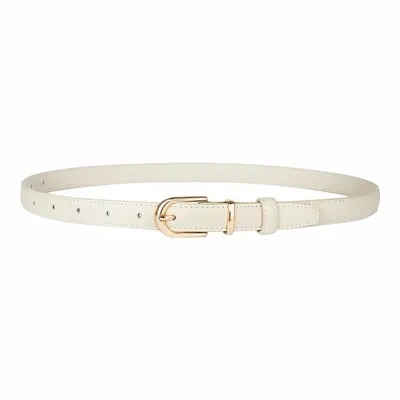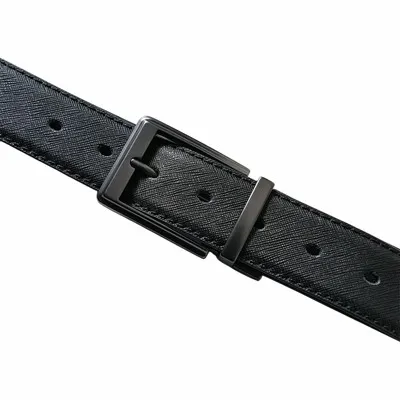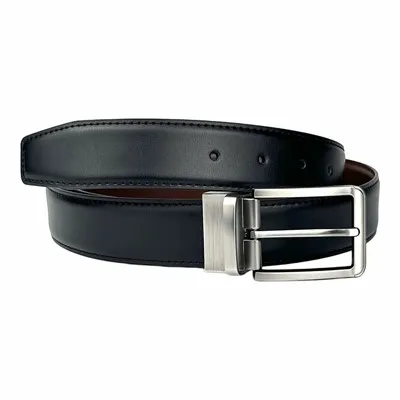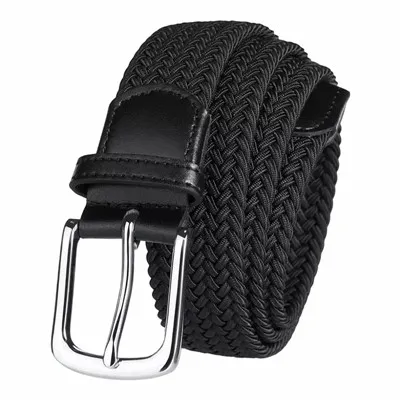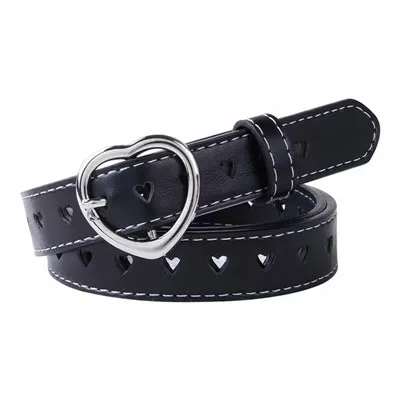

There exists a visual synergy between belt width and human body proportions-a practical design principle in garment engineering that has been repeatedly validated. Standard men's belts typically range in width from 3.0 cm to 3.8 cm; a belt that is too narrow (<2.8 cm) tends to diminish the sense of support at the waistline, while one that is too wide (>4.2 cm) risks visually compressing the upper body-a particular concern for men with narrower shoulders or average height, as it inadvertently accentuates the prominence of the hips. Professional styling advice suggests that for daily commuting and casual settings, a width of approximately 3.5 cm strikes the optimal balance between sleekness and versatility. This dimension allows the belt to contour naturally to the waistband of the trousers while ensuring the buckle remains securely anchored-without slipping-as one sits down or stands up, thereby preventing the belt's edges from protruding excessively and disrupting the garment's overall silhouette. This specific measurement is not merely an empirical guess, but rather a figure derived from comprehensive calculations based on data regarding the average waist circumference of Asian men, the thickness of trouser waistbands, and the dynamic dimensional changes of the torso during sitting.
After wearing belts from several different brands, I have come to realize that a truly comfortable belt is one where the buckle head bites firmly into the eyelet, the leather is supple yet retains its structural integrity without going limp, and the edges are smoothly rounded so as not to snag or abrade the hem of one's shirt.