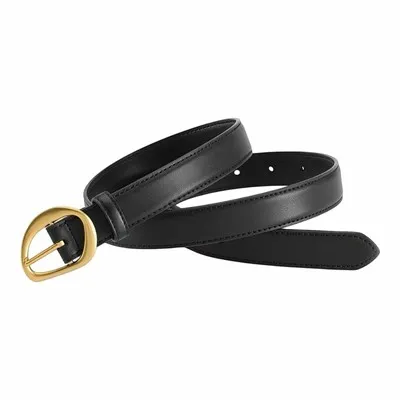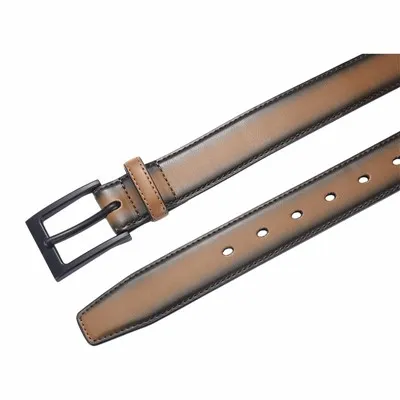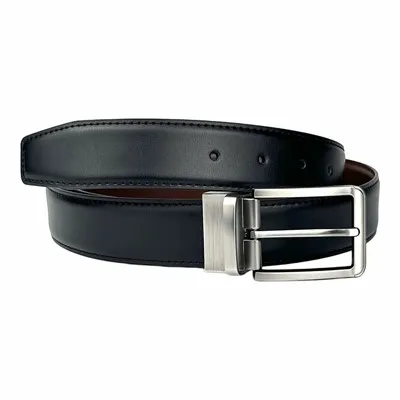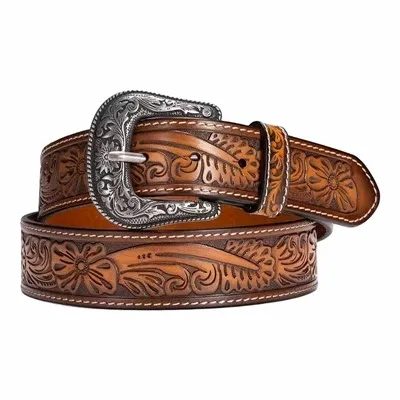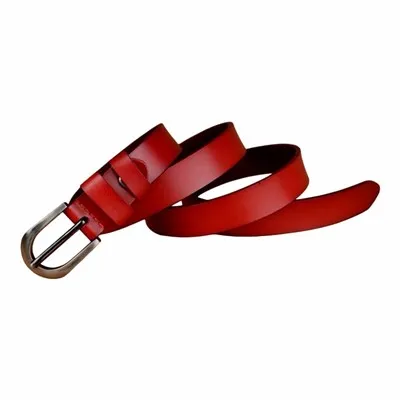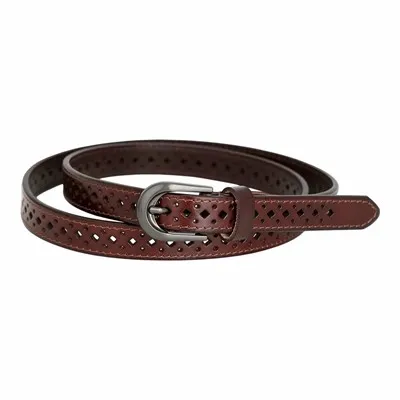

Children's belts are not merely scaled-down versions of adult styles; rather, they adhere to their own distinct sizing logic. According to ergonomic studies, the waist circumference of children aged 6 to 12 follows a non-linear growth curve, increasing by an average of 3 to 5 cm annually. However, variations in hip bone development, waistband height, and the specific positioning of skirts mean that for children of the same height, the effective usable range for a belt can fluctuate by as much as 8 to 10 cm.
A truly well-fitting children's belt must satisfy three key criteria: an adjustable range of at least 12 cm; a buckle width of no more than 2.5 cm to prevent uncomfortable pressure marks; and a strap thickness between 2.0 and 2.8 mm to strike a balance between flexibility and support. Belts that are too narrow are prone to slipping, while those that are too thick are difficult to thread through belt loops; furthermore, metal buckles lacking rounded edges pose a risk of scratching the skin. These specific details constitute the functional foundation that distinguishes children's belts from ordinary accessories.